The observability layer
for your AI analyst.
Understand what people ask, inspect how Sundial reaches
each answer, and turn real usage into a better analytical system.
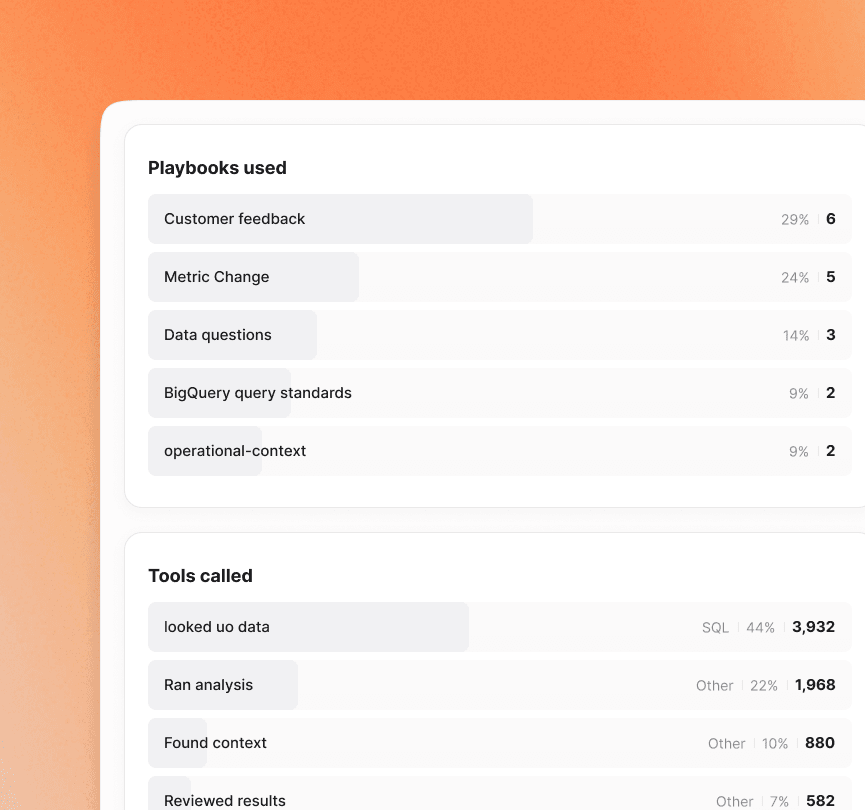
Understand how analysis gets done
See which Playbooks, semantic definitions, and tools the agent uses most. Patterns in that work reveal what is helping the system perform and where it needs more context.
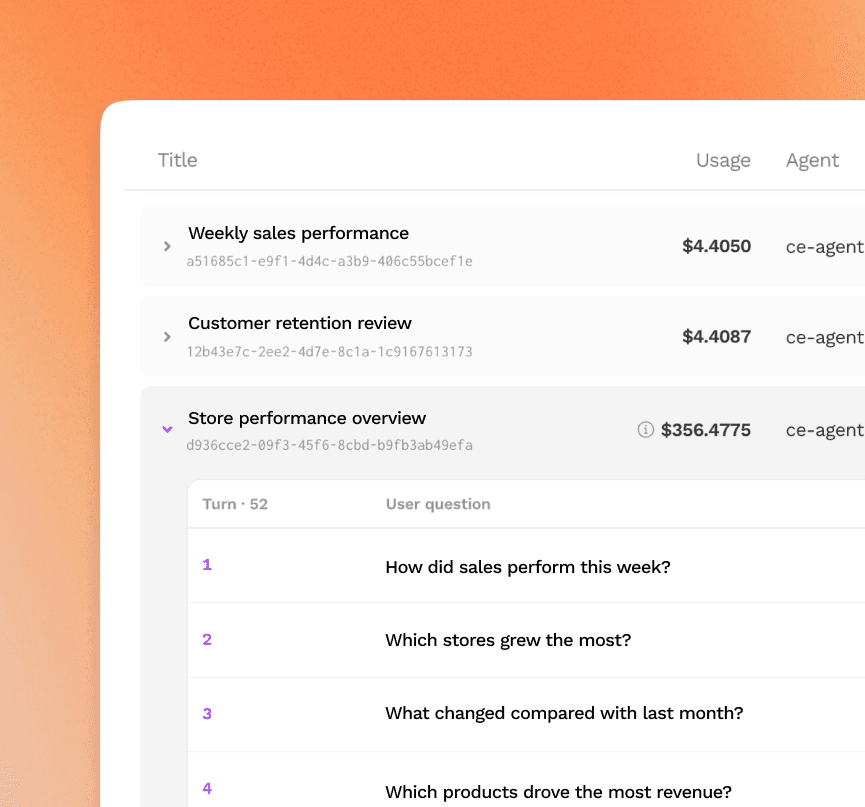
Investigate any answer, all the way down
Search real conversations, filter for patterns, and inspect the individual turns behind a response. See the questions, analytical activity, and operational details that explain how the work unfolded.
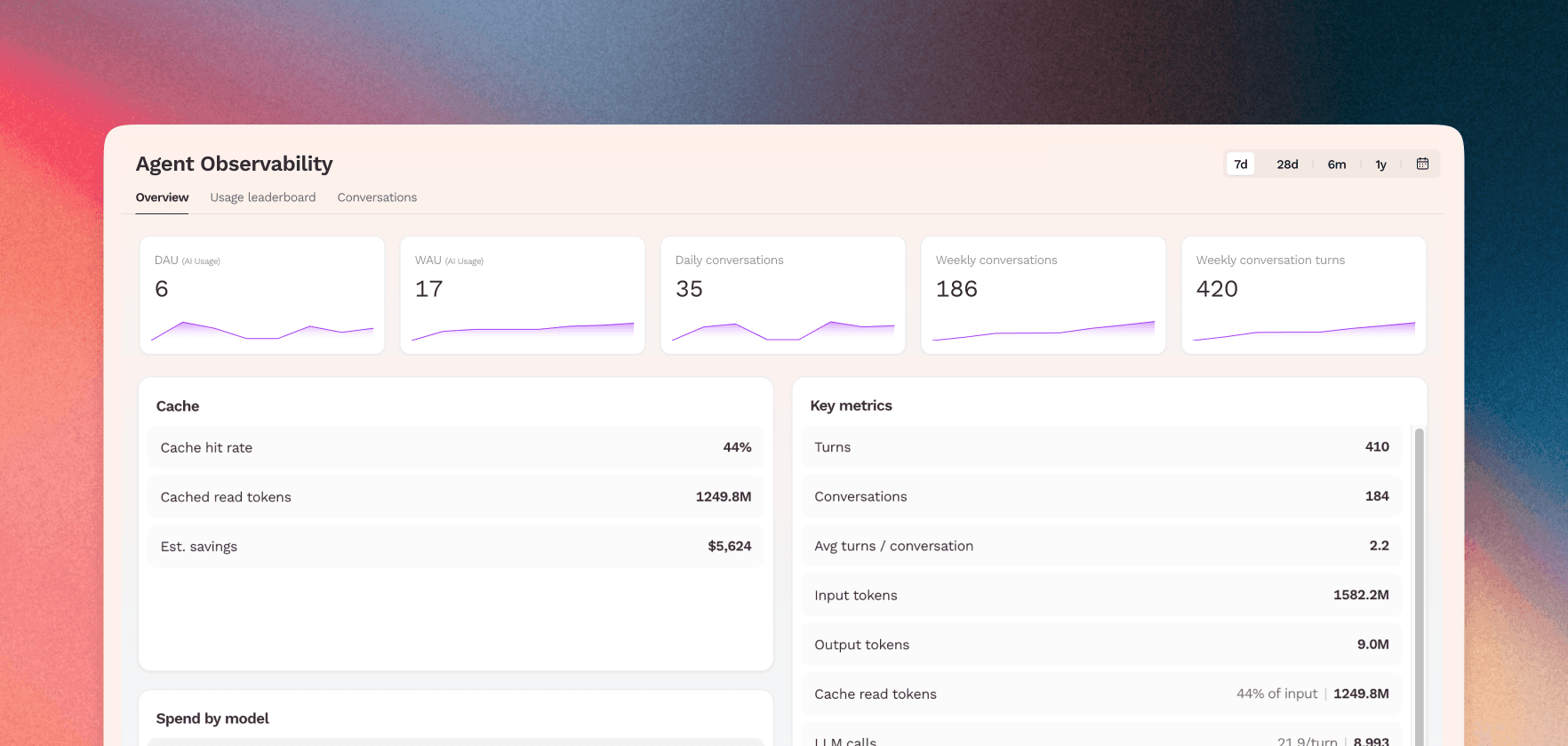
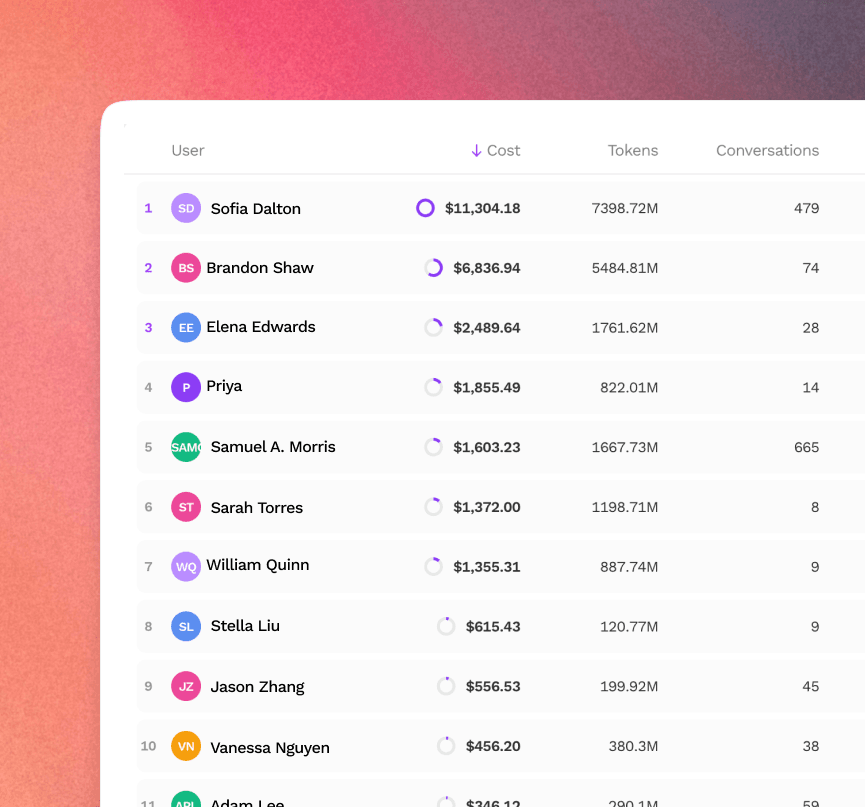
Manage adoption and efficiency
Understand who relies on Sundial, how usage changes over time, and where your team can make the analytical system more efficient.
Turn real usage into continuous improvement
From a weak answer to a stronger system, in three steps.
- 1
See the signal
Surface the conversations worth fixing.
- 2
Improve the context
Update the definitions or Playbooks behind the agent.
- 3
Prove the change
Run Evals before the change reaches more users.
Questions about Agent Observability
Who uses Agent Observability?
Agent Observability is built for the data team members responsible for how Sundial works across the organization. Workspace admins can review usage, investigate conversations, and find opportunities to improve the system.
What can our team inspect?
You can review aggregate adoption and operational patterns, then drill into individual conversations and their turns. This makes it easier to understand the questions people ask and the analytical path Sundial took to answer them.
How does this relate to Evals?
Observability helps you find the behavior worth improving in real usage. Evals help you confirm that a change to context, a Playbook, or an agent improves quality without causing regressions.
Is Agent Observability the same as Sundial's trust signals?
No. Trust signals are one useful way to investigate a conversation. Agent Observability is the broader operating surface for understanding usage, agent behavior, and opportunities to improve the analytical system.
Keep every analytical agent getting better.
Give your data team the visibility to understand real usage and improve the system behind every answer.