Data modeling that gets better with every question

Missing definitions turn simple questions into a modeling backlog. Sundial turns business requests into connected, validated changes across your dbt project and semantic layer.
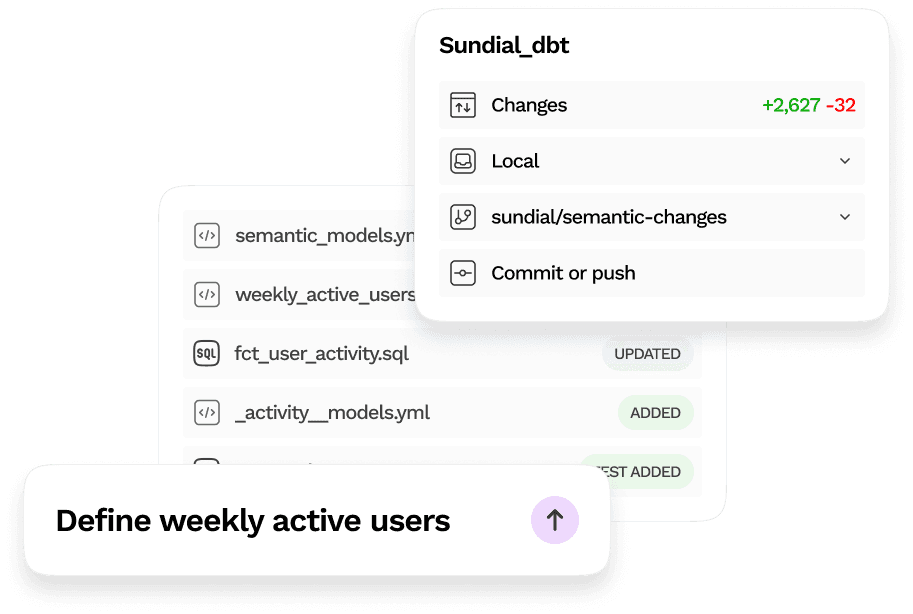
Sundial turning a request to define weekly active users into connected dbt model changes

Start with the outcome, not the files

Ask for the modeling outcome in business terms. Sundial determines which models and definitions need to change.

Example modeling prompts: Add a weekly active users measure, Define weekly active users, Make daily order reporting faster.

Built from your business context.
Improved through use.

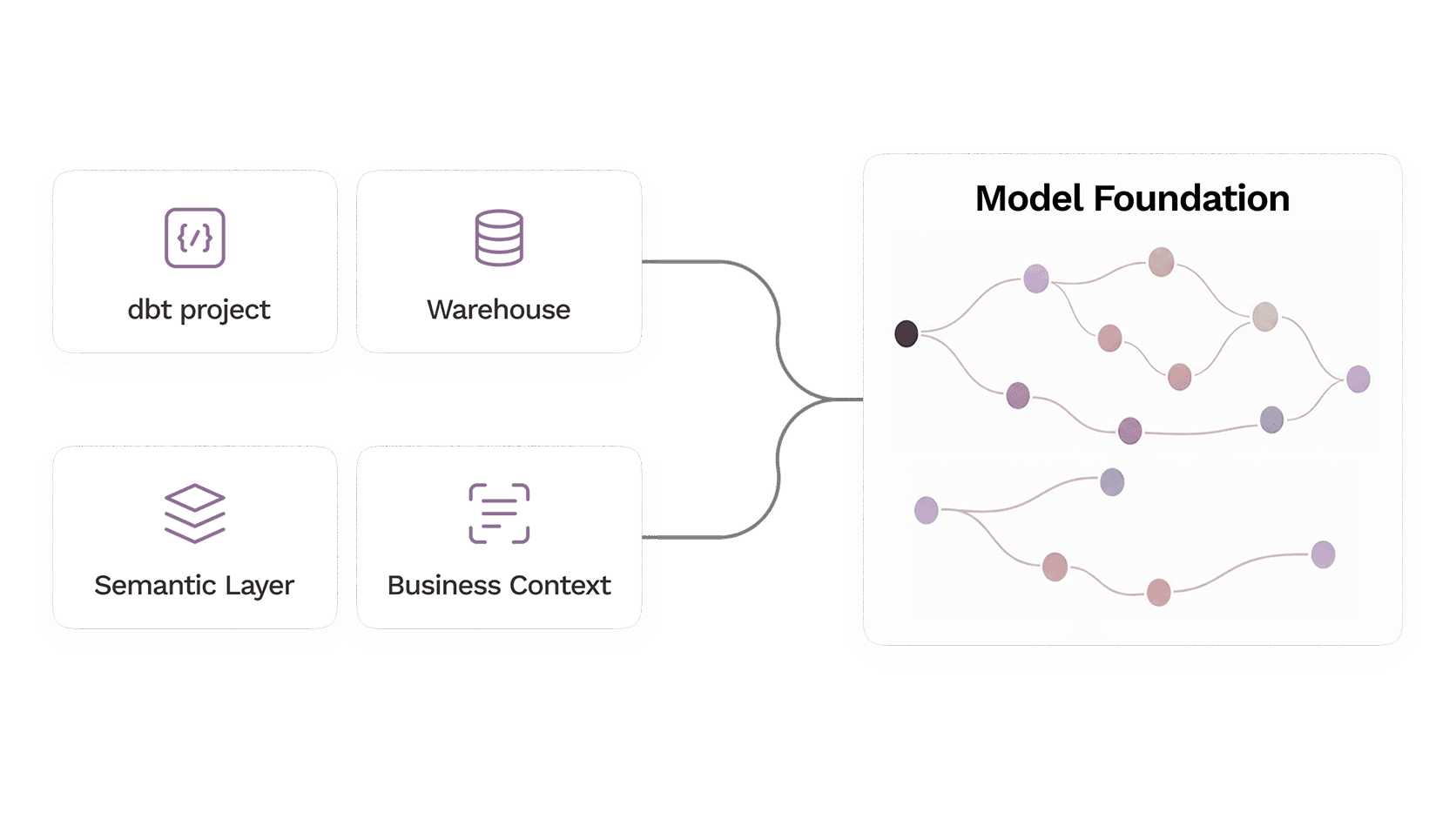
Connected business context informing a semantic model foundation for weekly active users

Start with the right foundation

Sundial uses your data and business context to create a model from scratch or fill gaps in the one you already have.
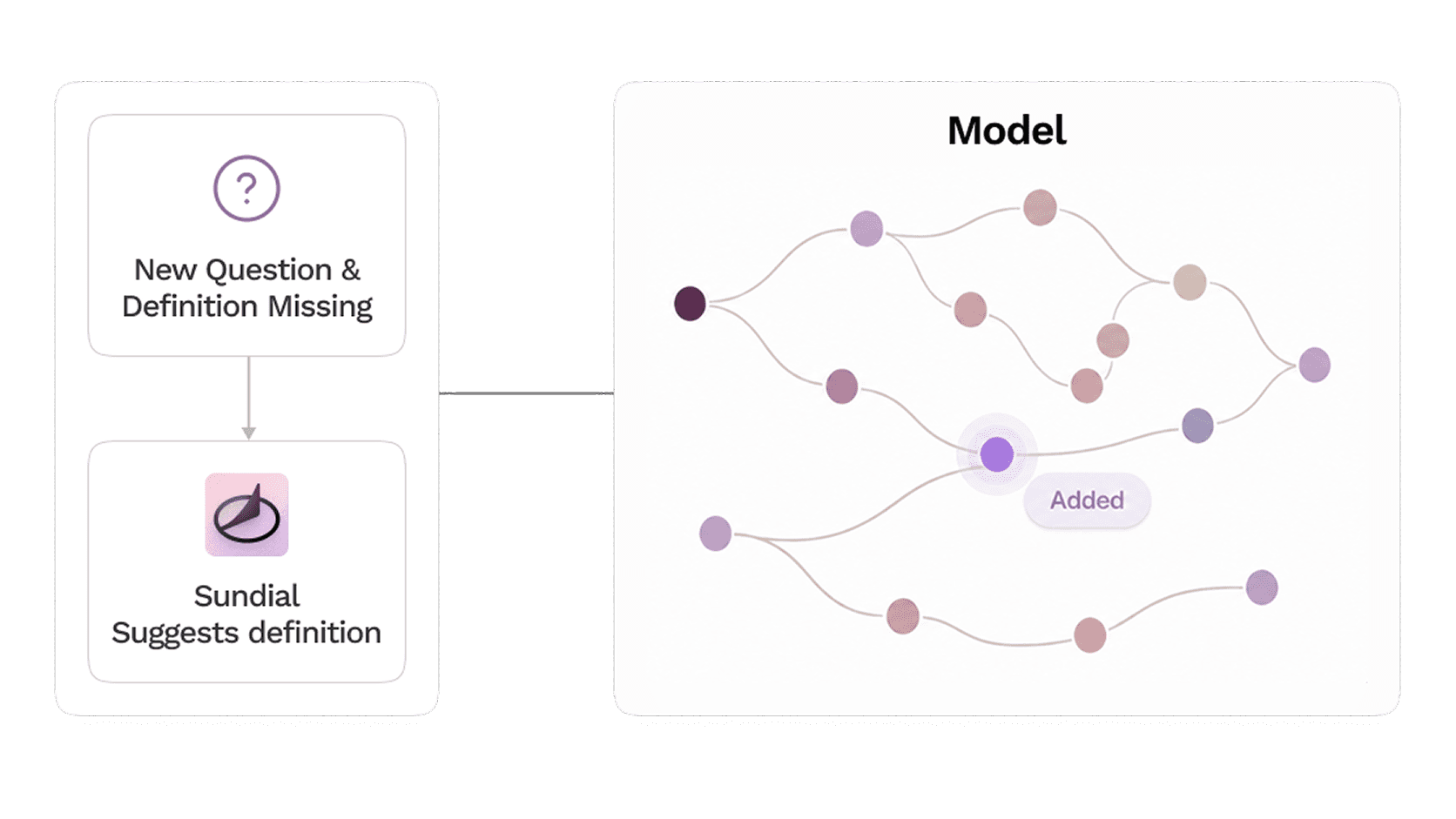
Sundial proposing a reusable weekly active teams measure after identifying a missing definition

Close gaps as they appear

When a question exposes missing logic, Sundial proposes reusable definitions so the next answer does not require another workaround.

One request.
A complete, reviewable change.

Sundial understands the outcome, grounds it in your model, prepares the connected changes, and validates the result for review.

Understand the modeling outcome

Ask for weekly active users in business terms. Sundial identifies the reusable definition your model needs.

Sundial understands the request to define weekly active users.
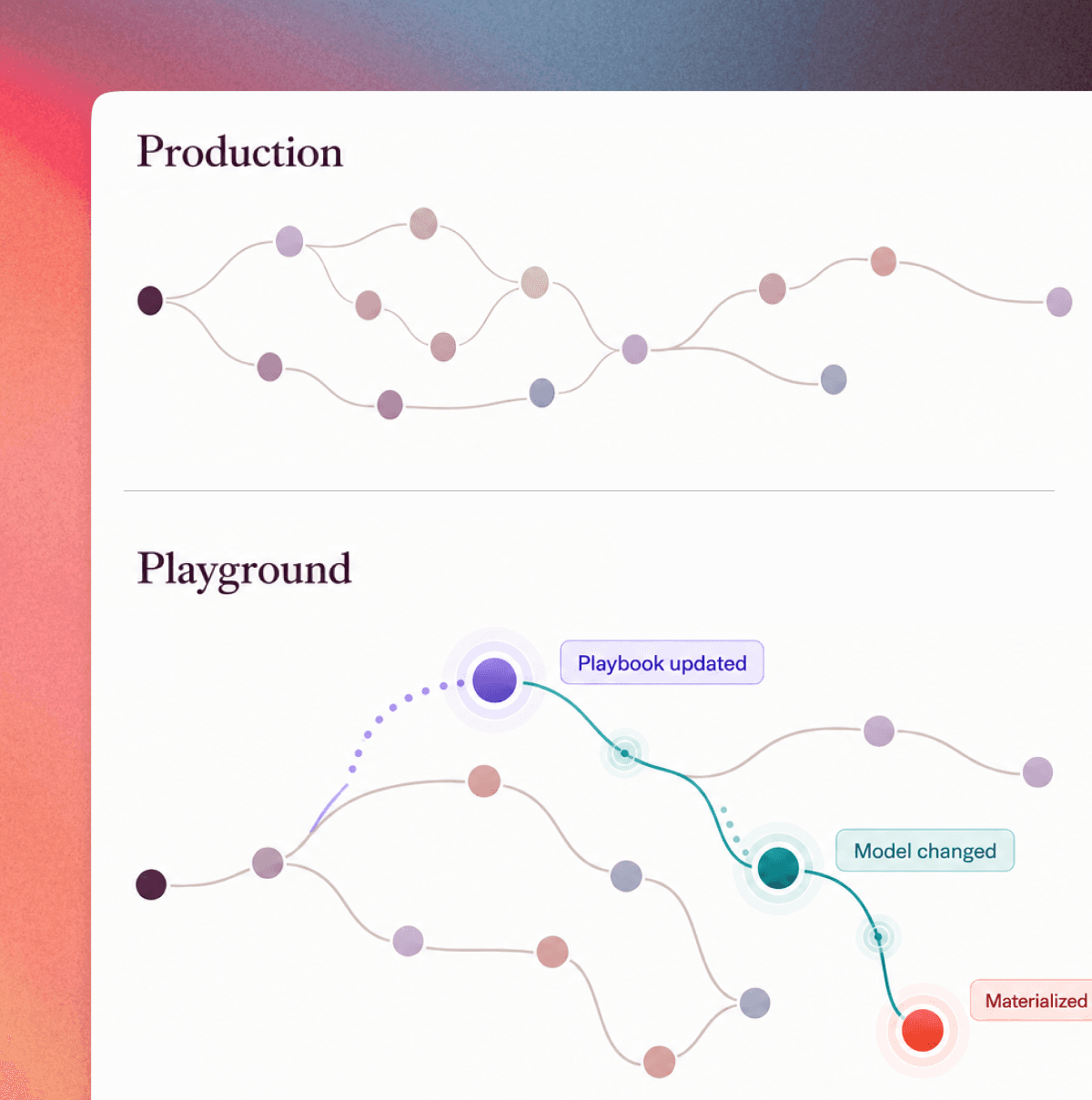
Validate changes before they reach your production model

Sundial creates an isolated version of the proposed model changes. Query the results, run evals, and compare them with the current model before anything is merged.
  • Test connected changes together
  • Query branch-specific results
  • Catch regressions before review
A production semantic graph above an isolated playground with validated model changes

Questions about data modeling with Sundial

What can Sundial create or change?
Sundial can create and update dbt models, semantic models, measures, dimensions, tests, and pre-aggregations. When a request spans multiple files, it prepares the connected changes together.
Can Sundial start from scratch or work with existing definitions?
Both. Sundial can build on your existing dbt and semantic definitions, fill missing gaps, or create new definitions using your connected data and business context.
How does Sundial understand our data model?
It reads your Git repository, dbt project, semantic definitions, lineage, conventions, and relevant warehouse data. When the intended grain or business logic is unclear, it asks your team to confirm.
How are changes validated?
Sundial validates semantic definitions and runs dbt parse and compile checks. For configured workspaces, it can also materialize branch-specific tables and run queries or evals against an isolated version of the model.
Does Sundial change production directly?
No. It prepares and verifies the changes in a Git-backed workspace, then presents them for approval. Your team reviews and merges the resulting pull request through its existing process.
What do we need to connect?
Sundial needs access to your Git repository and data warehouse. This gives it the project structure and real data needed to prepare grounded model changes.
Where can our team use it?
Teams can start a data modeling conversation inside Sundial or use the same capability through MCP-enabled workflows.

Clear the modeling backlog without giving up control

Give analysts a faster path from a business question to a reusable definition. Give analytics engineers a complete, validated change to review instead of another request to build from scratch.